

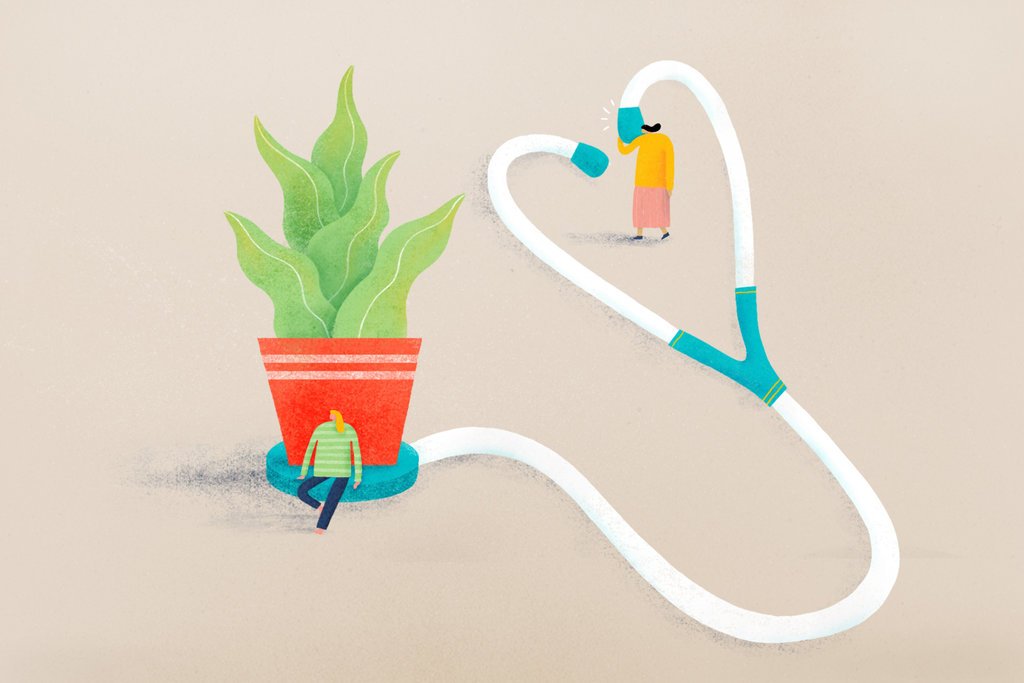
To treat back pain, look to the brain not the spine
December 30, 2017
 Where pain lives
Fixing chronic back pain is possible only when patients understand how much it is produced by the brain, not the spine
“We always thought of it as acute pain that just goes on and on – and if chronic pain is just a continuation of acute pain, let’s fix the thing that caused the acute, and the chronic should go away,’ … ‘That has spectacularly failed. Now we think of chronic pain as a shift to another place, with different mechanisms, such as changes in genetic expression, chemical release, neurophysiology and wiring. We’ve got all these completely new ways of thinking about chronic pain. That’s the paradigm shift in the pain field.”
Source: To treat back pain, look to the brain not the spine | Aeon Essays

Maternal Morbidity Costs Top $3.4 Billion A Year In United States
December 24, 2017

The rate of life-threatening complications for new mothers in the U.S. has more than doubled in two decades as a result of pre-existing conditions, medical errors and unequal access to care.
Source: Maternal Morbidity Costs Top $3.4 Billion A Year In United States : Katherine Ellison and Nina Martin, Propublica & NPR
This post currently has no comments | Add comment
How to Have a Better Relationship
December 17, 2017
Decades of scientific research into love, sex and relationships have taught us that a number of behaviors can predict when a couple is on solid ground or headed for troubled waters. Good relationships don’t happen overnight. Keep reading for the latest in relationship science, fun quizzes and helpful tips to help you build a stronger bond with your partner.
Source: How to Have a Better Relationship -Tara Parker-Pope-Well Guides – The New York Times
This post currently has no comments | Add comment
How To Fall Asleep And Why We Need More
October 22, 2017

Sleep Scientist Warns Against Walking Through Life ‘In An Underslept State’
Source: How To Fall Asleep And Why We Need More : Shots – Health News : NPR
This post currently has no comments | Add comment
The Ultimate Guide to Becoming Your Best Self: Build your Daily Routine by Optimizing Your Mind, Body and Spirit
September 12, 2017
 “We are what we repeatedly do. Excellence, then, is not an act, but a habit.” Aristotle
Source: The Ultimate Guide to Becoming Your Best Self: Build your Daily Routine by Optimizing Your Mind, Body and Spirit – Chris Winfield – Buffer
This post currently has no comments | Add comment
The Disciplined Pursuit of Less
July 25, 2017
 Why successful people and organizations do not automatically become very successful, and what we can do to avoid dissipation of effort and continue our upward momentum.
Here are three suggestions.
Source: The Disciplined Pursuit of Less – Greg McKeon – Harvard Business Review
This post currently has no comments | Add comment
Why Men Don’t Live as Long as Women. It’s the testosterone, don’t you know.
April 17, 2017
 The latest research on the effects of testosterone on reproduction, longevity and aging.
Source: Aging on Nautilus: Why Men Don’t Live as Long as Women
This post currently has no comments | Add comment
The Heroism of Incremental Care
April 2, 2017

We devote vast resources to intensive, one-off procedures, while starving the kind of steady, intimate care that often helps people more.
“We have a certain heroic expectation of how medicine works. Following the Second World War, penicillin and then a raft of other antibiotics cured the scourge of bacterial diseases that it had been thought only God could touch. New vaccines routed polio, diphtheria, rubella, and measles. Surgeons opened the heart, transplanted organs, and removed once inoperable tumors. Heart attacks could be stopped; cancers could be cured. A single generation experienced a transformation in the treatment of human illness as no generation had before. It was like discovering that water could put out fire. We built our health-care system, accordingly, to deploy firefighters. Doctors became saviors. But the model wasn’t quite right. If an illness is a fire, many of them require months or years to extinguish, or can be reduced only to a low-level smolder. The treatments may have side effects and complications that require yet more attention. Chronic illness has become commonplace, and we have been poorly prepared to deal with it. Much of what ails us requires a more patient kind of skill.”
Source: The Heroism of Incremental Care – Atul Gawande, The New Yorker
This post currently has no comments | Add comment

This post currently has no comments | Add comment